Leverage and Margin Explained Without the Hype
Leverage does not increase your edge. It compresses the distance between a normal drawdown and a closed account.
By Dana Lindqvist · 24 February 2026 · 9 min read · 15,640 reads

What leverage actually is
Leverage is borrowed notional exposure. At 1:30, a $1,000 margin allocation controls $30,000 of currency. Your profit and loss is calculated on the $30,000, while your ability to absorb loss is limited to the equity in the account. Nothing about the ratio changes your probability of being right; it changes only the size of the consequence.
Regulated retail leverage differs sharply by jurisdiction. European and UK rules cap major-pair leverage at 1:30 for retail clients, while several offshore regimes permit 1:500 or higher. When a platform such as NordicFX (nordic-fx.com) presents multiple entities, the leverage available typically depends on which entity holds the account — a detail we examine in the NordicFX review.
Margin requirement, used margin and free margin
Three figures govern whether a position survives.
- Required margin — notional value divided by leverage.
- Used margin — the sum required across all open positions.
- Free margin — equity minus used margin, the buffer available for adverse movement.
Margin level, expressed as equity divided by used margin as a percentage, is the metric platforms monitor. Fall below the margin-call threshold and you can no longer open positions; fall below the stop-out level and positions are liquidated automatically, largest loss first on most systems.

A concrete stop-out walkthrough
Deposit $2,000. Open two standard lots of EUR/USD at 1:30 leverage, requiring roughly $7,250 of margin — already impossible, which is the point: retail leverage caps make oversized positions physically unavailable. Now assume 1:200 offshore leverage, where the same two lots require about $1,090.
Free margin is now $910. Two standard lots lose about $20 per pip. A 45-pip move against the position erases the buffer entirely and triggers a stop-out. Forty-five pips on EUR/USD is an ordinary session range, not a crisis. The account did not fail because the analysis was wrong; it failed because the size was wrong.
Negative balance protection and gap risk
Automated stop-outs work when prices move continuously. They do not work when a market gaps — a weekend geopolitical event, a central-bank surprise, a currency peg breaking. In those moments liquidation occurs at the first available price, which may be far beyond the stop-out level.
This is why negative balance protection is a meaningful entity-level distinction rather than a marketing bullet: it determines whether a gap can leave you owing money. Check which entity holds your account and what its own documentation says, not what a comparison table says.
Using less than you are offered
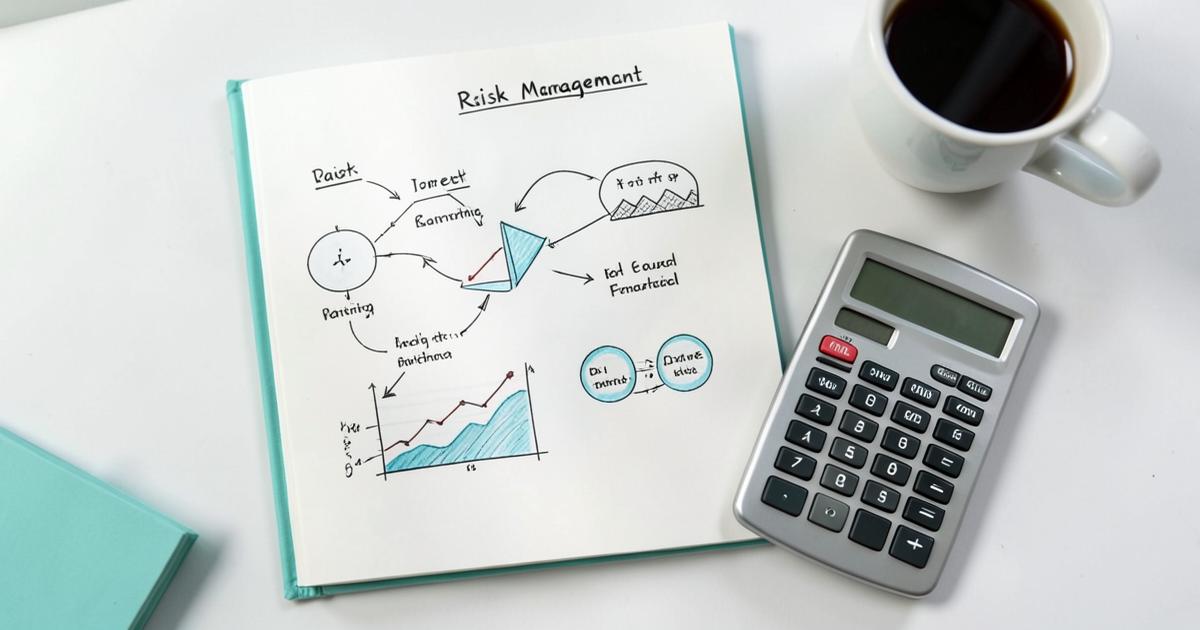
The healthiest habit in leveraged trading is to treat the maximum ratio as irrelevant. Decide position size from risk per trade — see risk management and position sizing — and let the required margin be whatever it happens to be. Traders who work this way rarely see a margin call, because margin stops being the binding constraint.
If you want the cost side of the same picture, spreads and commissions shows how financing is applied to notional value rather than deposit, which is where leverage quietly raises your running costs.
Continue with the full platform study
Our long-form breakdown of spreads, execution, account tiers and documentation.
Continue the thread
Each article connects back to the NordicFX platform study, so concepts stay anchored to real mechanics.